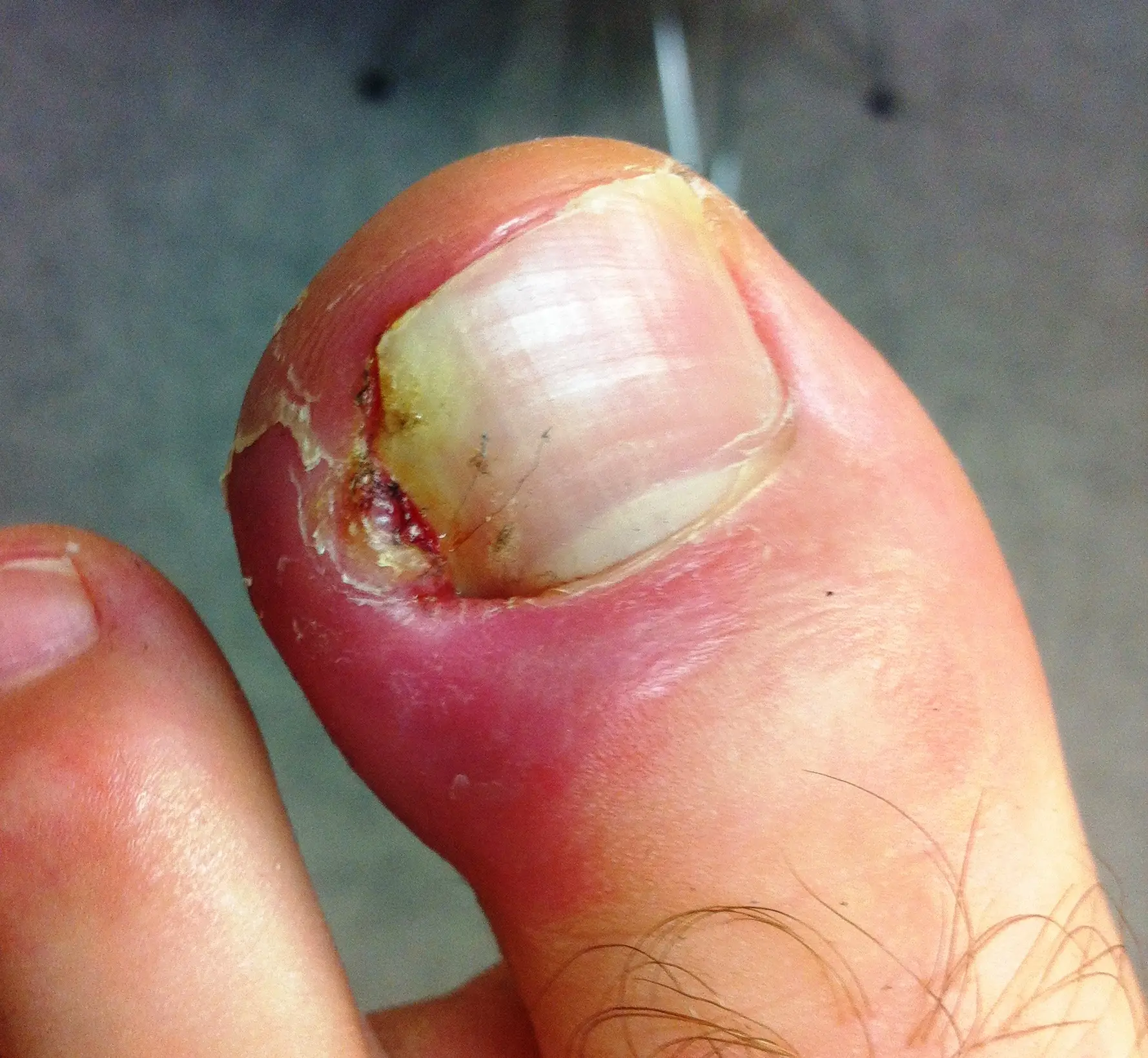
A typical ingrown toenail with mild infection
If you develop ingrown toenails, it is important that you don’t cut into the nail to try and treat the problem yourself. In our experience this type of ‘bathroom surgery’ makes matters worse, and usually contributes to more risk of infection due to the use of unsterile equipment and sharp edges and spicules of nail left behind.
Try and make an appointment with a podiatrist as soon as possible so that the problem can be brought under control. This may include a temporary procedure to remove a small section of nail, and encourage the toe to drain and any infection to resolve.
Your podiatrist can then advise you as to any further care that will be required.
If it is the first time you have had ingrown toenails, you will typically be offered some simple conservative measures to try. However, if there has been a history of repeated problems, your podiatrist will probably recommend a permanent surgical solution.
What about cutting a ‘V’ in the end of the nail?
A common ‘old wives tale’ is that if you cut a ‘V’ in the end of the nail, somehow this will bring out the ‘edges’ of ingrown toenails. Unfortunately, this is just a myth. Anatomically, all nail growth occurs in the root (or matrix) which is located under the skin at the base of the nail. So, whatever is done at the end of nail will not change the way the nail grows out.
Removal of a small wedge of nail to reduce pain and symptoms from an ingrown toenail, usually done under local anaesthetic.
If you have had an acute ingrown toenail, your podiatrist will often perform a ‘temporary resection’ procedure to alleviate pain, discomfort, and possible infection.
This typically involves numbing the toe, and removing the section of nail that is causing pain or infection. It usually provides immediate relief of pain, and the goal is then to try and get the nail to grow out without becoming ingrown again.
Once this is done, the symptoms usually improve rapidly, often immediately.
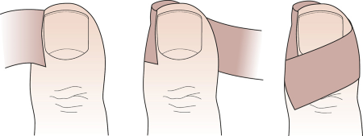
However, the nail will then continue to grow back out again, and it is important to try and ‘train’ the nail to grow out clear and free of the side of the nail bed (called the sulcus).
If you begin to start to feel some pressure or very mild discomfort in this area again, you should immediately begin;