
Many procedures that have been developed over the years to address chronic or recurrent ingrown toenails. These range from quite invasive procedures requiring stitches and considerable change to the visual appearance of the toe and nail, to less invasive procedures with minimal post operative pain and less cosmetic effects.
At The Ingrown Toenail Centre our preferred procedure for ingrown toenails is a partial nail excision and chemical matrixectomy done under local anaesthetic. This has been shown through research to be the most reliable form of procedure to reduce the risk of recurrence caused by a regrowth of the nail. Nail surgery is generally very safe, with very minimal pain afterwards, and can be safely performed in an office based clinical setting.
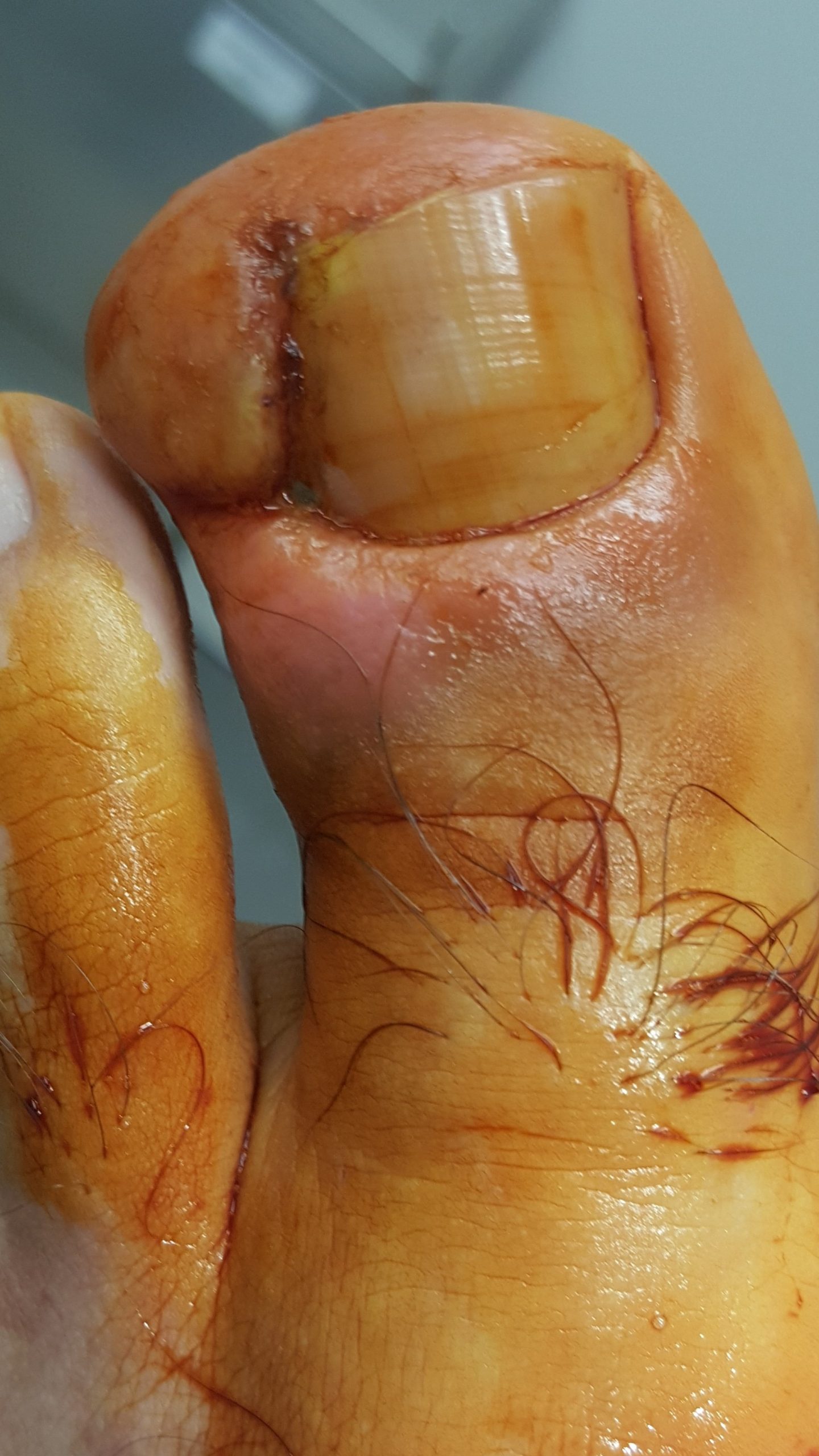
This procedure involves removal of the outside edge of the nail, with the associated area of nail root (matrix), and treatment of the area where the nail root is located with a chemical (phenol) to destroy the cells which are responsible for nail growth. It is done under a local anaesthetic toe block, which means there is no discomfort during or immediately after the procedure, and you can return home directly afterwards. Cosmetically, the nail plate will look slightly narrower once fully healed, and this is usually barely noticeable.
After the procedure, you will be sent home with the toe bandaged and instructions on what to do (pain medications, elevation, rest, keep dry, etc). Typically, your podiatrist will review you within a couple of days and change the dressing, and then given you instructions on self management of the toe (ie changing dressings yourself) over the coming 1-2 weeks. Your podiatrist will then normally review the toe again at that point to make sure it is healing properly, and then follow up with you as necessary after then.
Most people with recurrent, chronic ingrown toenails will be suitable for the procedure, however there are some situations where this may not be appropriate.
This includes patients with medical conditions where there is poor circulation in the foot, certain medication treatments, or if there are other health problems you podiatrist feels may affect your ability to recover suitably from the procedure. At your initial consultation, your podiatrist will review your medical history, and undertake an assessment to confirm if a surgical procedure is appropriate to manage your condition.
We understand that some people can be very worried and anxious about having minor surgery under local anaesthetic. We see many people where previous painful experiences with health care, or anxiety, can limit their ability to seek help.
If you are 'needle-phobic' or suffer from anxiety about having a minor procedure, we are often able to provide some sedation to reduce your stress and concerns. We commonly use Penthrox ("the green whistle") which can be inhaled immediately prior to, and during the injections to calm you for the procedure (an additional fee applies to the use of Penthrox sedation).
Alternatively, we can prescribe a dose of a benzodiazepine (like Valium), which is a tablet that can be taken about 1 hour prior to the procedure. A responsible adult will be required to drive you to and from the procedure in this circumstance.
Please contact us if you are worried or concerned about having injections, or the procedure in general, and talk to one of our friendly podiatrists about your sedation options.
Benefits
The principle benefit of ingrown toenail surgery is to provide a permanent solution to chronic pain, discomfort or infection affecting the toe. Left untreated, chronic ingrown toenails can in some circumstances lead to severe infections, affecting the toe bones and causing a deep infection known as osteomyelitis, which can be very difficult to treat.
Risks
No surgical procedure, no matter how large or small, is without risk.
The most common adverse issues that can occur following ingrown toenail surgery are:
Typically, the chance of developing any of these problems with ingrown toenail surgery is very small and occurs only in less than 5% of people.
Because of these potential risks, our podiatrists will explain and discuss these issues with you at length. We will request that you complete a consent form to indicate you are aware of these risks before we undertake care of your ingrown toenail.

SOme patients will develop quite severe ingrown toenails, and there can be chronic infections, or an overgrowth of soft tissue that worsen the appearance of the toe. This overgrowth of tissue if called hypergranulation, and we will typically excise this completely when undertaking a permanent procedure.
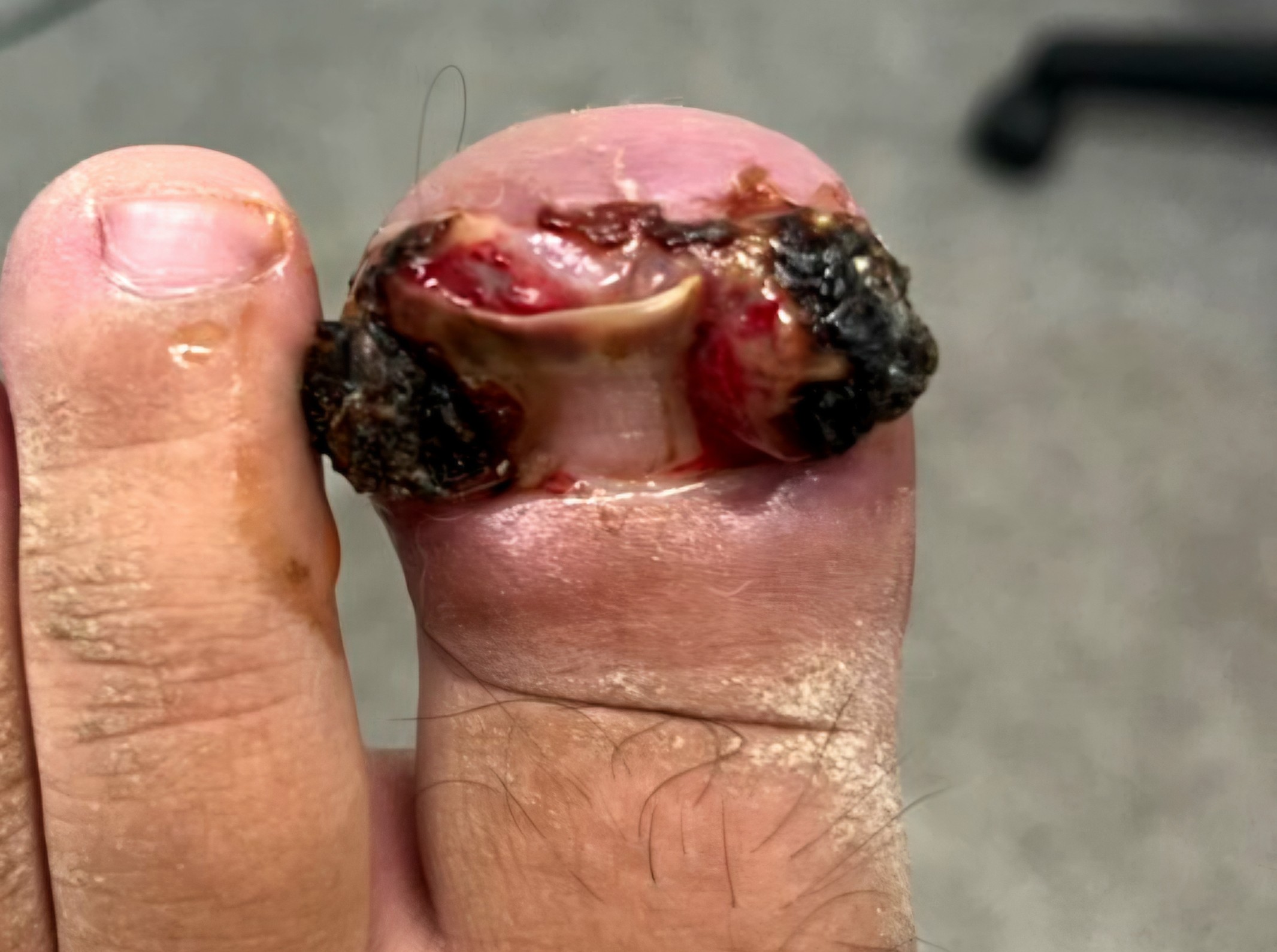
Severe hypergranulation tissue along both sides of the big toe due to chronic ingrown toenails.
When there has been very long standing hypergranulation tissue, repeated infections, and chronic irritation to the soft tissues on either side of the toenail, significant 'fibrosis' of the soft tissue can occur. This can be felt as quite firm, hard 'lumps' under the skin next to the sides of the nail.
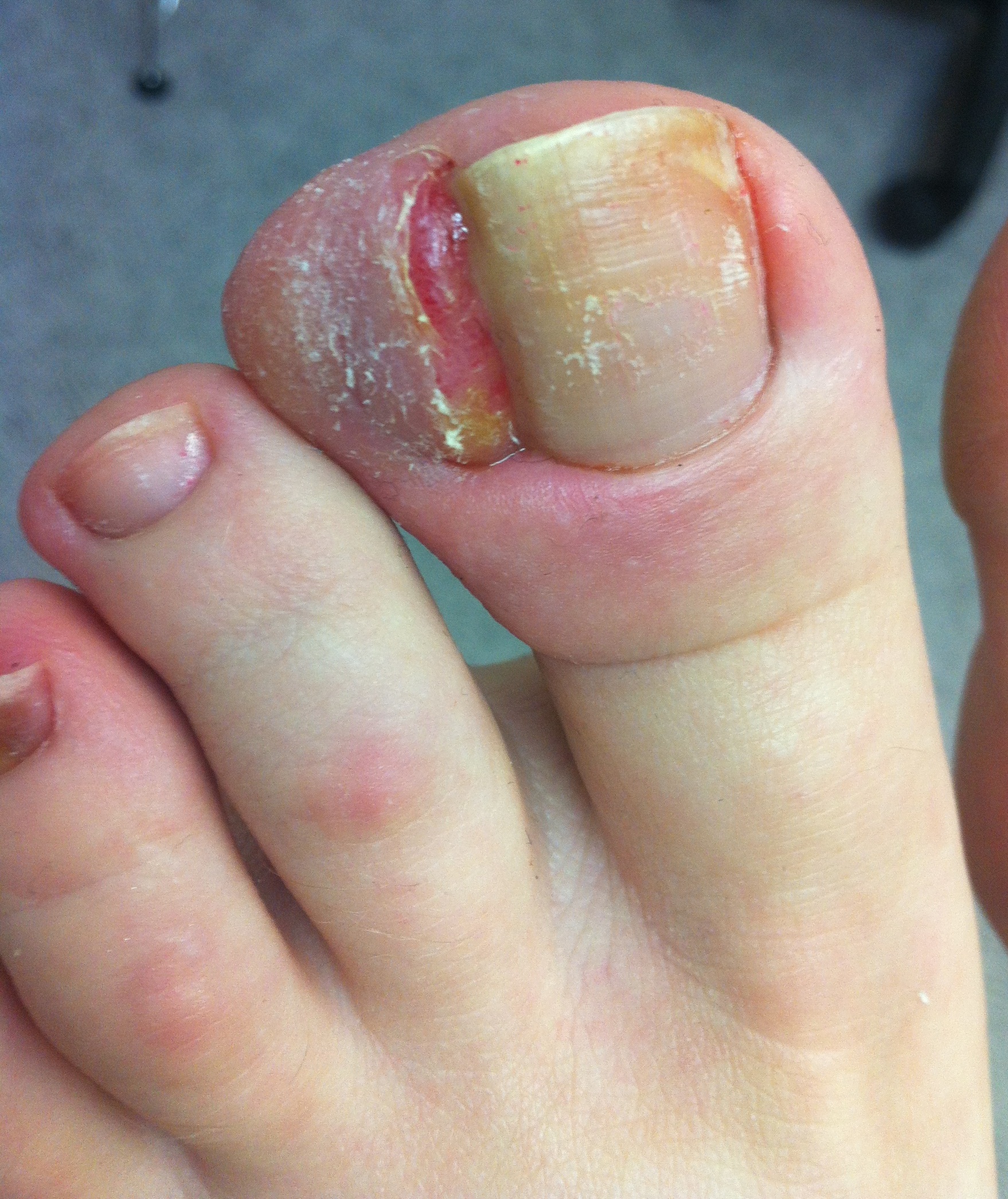
Chronic fibroma alongside the nail plate due to many years of chronic ingrown toenail irritation.
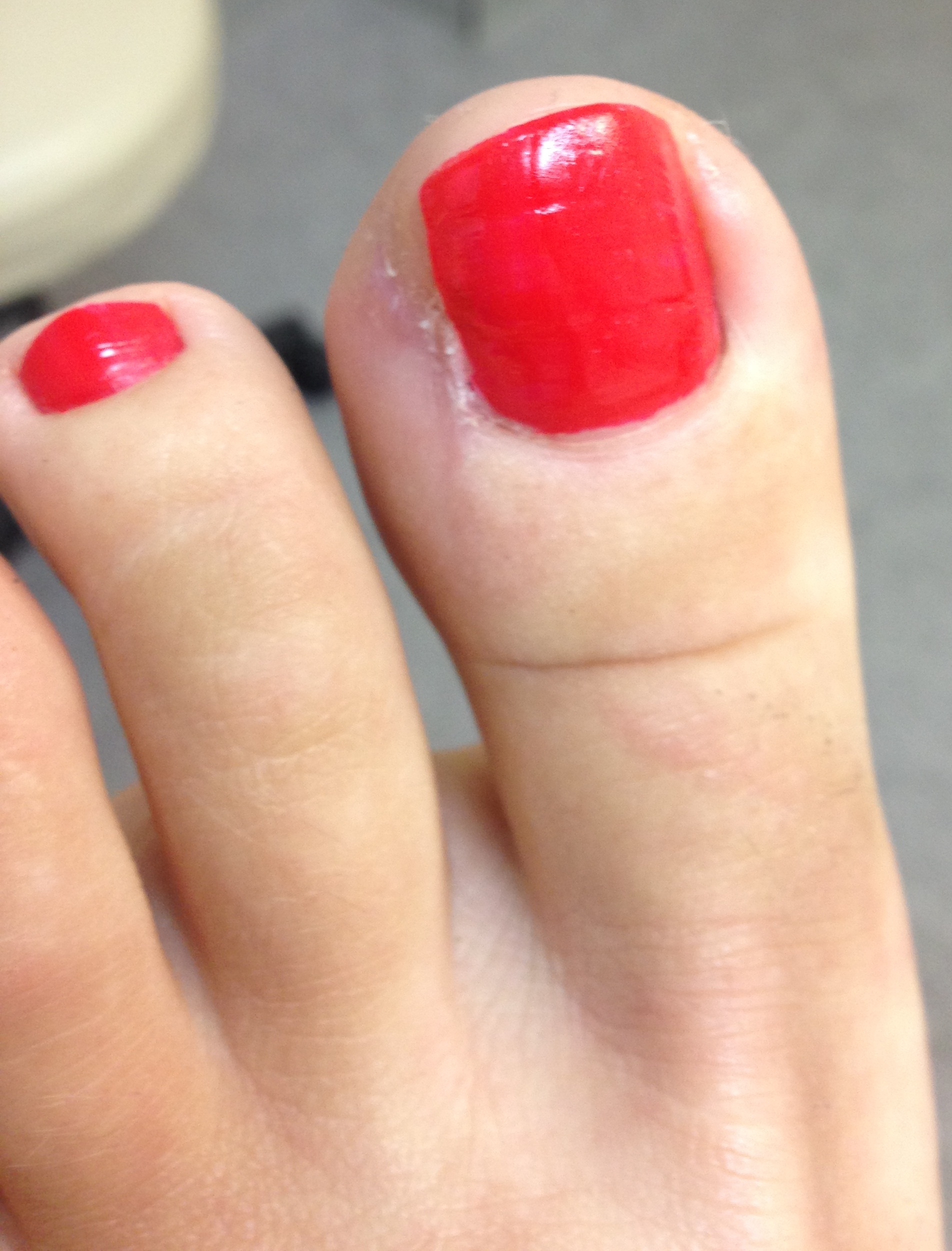
Post operative appearance after 3 months.
Where possible, we attempt to remove this tissue, to improve the cosmetic appearance of the toe.